

 Quiz Mistress
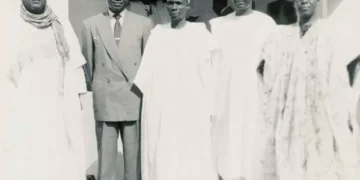
Introduction: Six Years That Changed Africa Forever
On October 1, 1960, something unprecedented happened on the African continent. Nigeria – a vast, multi-ethnic nation of over 250 languages, three dominant regions, and 55 million people – broke free from British colonial rule and stepped, blinking, into the light of independence.
What followed was one of the most ambitious democratic experiments in African history: the First Republic.
For six years – from 1960 to January 15, 1966 – Nigeria ran a Westminster-style parliamentary democracy. It had a President, a Prime Minister, regional Premiers, a bicameral parliament, and political parties that commanded fierce loyalty from millions. It produced giants. It produced martyrs. And ultimately, it produced a military coup that ended it all in blood.
But before the guns fired and democracy died, Nigeria’s First Republic gave the world ten leaders worth remembering. Their stories are of brilliance and ambition, of vision and tragedy, of a nation that almost got it right.
Here are the top 10 Nigerian leaders of the First Republic – ranked not just by title, but by historical impact, legacy, and the sheer drama of their lives.
1. Sir Abubakar Tafawa Balewa – “The Golden Voice of Africa”
Role: Prime Minister of Nigeria (1960–1966)
If the First Republic had one face to the world, it was Tafawa Balewa’s.
Born in 1912 in the small town of Tafawa Balewa in what is now Bauchi State, Abubakar Tafawa Balewa rose from humble origins to become Nigeria’s only Prime Minister – the Head of Government who steered the nation through its most consequential years. He was articulate, dignified, and widely respected, earning the title “The Golden Voice of Africa” for his eloquence at international forums, including the United Nations, where he delivered some of the most celebrated speeches of his era.
As Prime Minister from 1957 (when Nigeria gained self-governance) through independence in 1960 and into the republic, Balewa oversaw the consolidation of federal institutions, navigated the dangerous politics of a regionally divided country, and maintained a coalition government between the Northern People’s Congress (NPC) and the National Council of Nigerian Citizens (NCNC).
He was no pushover. His government imprisoned opposition leader Obafemi Awolowo and declared a state of emergency in the Western Region in 1962 – decisions that remain controversial to this day. But even his critics acknowledged his statesmanship on the world stage.
On January 15, 1966, coup plotters dragged him from his home. His body was found on a roadside near Lagos days later.
Nigeria has never had a Prime Minister since.
Legacy: Nigeria’s highest denomination banknote long bore his face. His assassination marked the definitive end of civilian democratic rule for decades.
2. Dr. Nnamdi Azikiwe – “Zik of Africa”
Role: Governor-General (1960–1963), President of Nigeria (1963–1966)
Long before he became Nigeria’s first President, Nnamdi Azikiwe was already a legend.
Born in 1904 in Zungeru, Northern Nigeria, to an Igbo family, Azikiwe studied in the United States – at Storer College, Howard University, Lincoln University, and Columbia – before returning to West Africa as a firebrand journalist and nationalist activist. His newspapers, including the West African Pilot, were weapons of mass awakening, agitating for African independence at a time when British colonial power seemed unshakeable.
By independence in 1960, “Zik of Africa” was Nigeria’s most iconic pan-African figure. He became Governor-General when Nigeria gained independence, and then, when Nigeria became a republic in 1963, he was sworn in as the country’s first President.
His presidential role was largely ceremonial under the parliamentary system – real executive power lay with the Prime Minister. But Azikiwe’s symbolic importance was immeasurable. He represented the aspirations of a continent, not just a country.
When the January 1966 coup occurred, Azikiwe was abroad receiving medical treatment – a fact that saved his life. He returned to a Nigeria already transformed, and went on to live until 1996, witnessing decades of political turbulence he had helped set in motion.
Legacy: He is celebrated as the “Father of Nigerian Nationalism.” The Nnamdi Azikiwe International Airport in Abuja bears his name, as does a federal university. He remains one of the most studied African statesmen of the 20th century.

GIPHY App Key not set. Please check settings