 Quiz Mistress
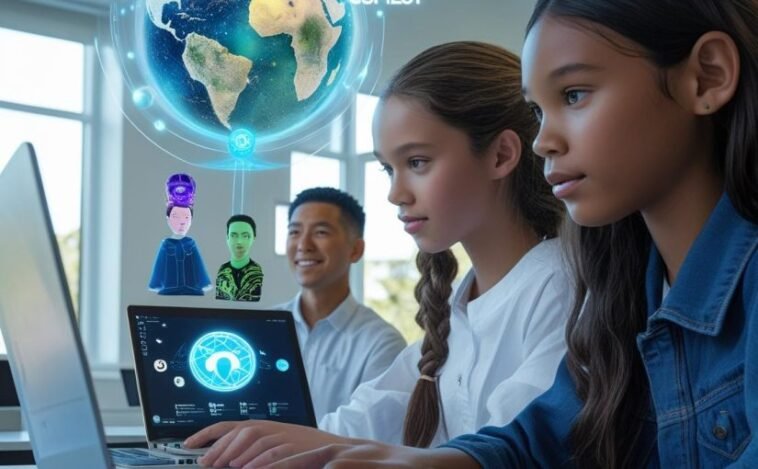
Artificial intelligence (AI) is changing the way people learn, study, research and work. From secondary school students to university learners and adult professionals, millions of people are now using AI-powered tools to explain difficult concepts, organize information, practise questions and improve their study routines.
However, using AI successfully in education is not simply about asking a chatbot to provide answers. Students need to understand how to use artificial intelligence responsibly, verify information, think critically and ensure that technology supports learning rather than replacing it.
UNESCO says digitalization and generative AI are reshaping education by creating opportunities for greater access and personalized learning, while also raising concerns about privacy, safety, ethics and inequality.
This makes AI literacy an increasingly important educational skill.
What Is AI Literacy?
AI literacy is the ability to understand, use and evaluate artificial intelligence responsibly.
For students, this means knowing what AI tools can do, understanding their limitations, checking information produced by AI and making responsible decisions about when and how to use the technology.
An AI-literate student does not automatically believe everything an AI system produces. Instead, the student asks questions such as:
- Is this information accurate?
- Where did this information come from?
- Can I verify it using a textbook or reliable source?
- Does this answer make sense?
- Am I using AI to learn or simply to avoid learning?
These questions are becoming increasingly important as AI becomes part of everyday education.
UNESCO’s current digital education guidance emphasizes human agency, critical thinking and ethics when AI is used in education.
1. Use AI to Understand Difficult Topics
One of the most useful applications of AI for students is explaining difficult concepts in simple language.
A student struggling with algebra, chemistry, economics, history or computer science can ask an AI tool to explain a concept step by step.
For example, instead of asking:
“Give me the answer to this mathematics question.”
A student can ask:
“Explain how to solve this problem step by step and show me why each step is necessary.”
The second approach encourages understanding.
Students can also ask AI to explain the same concept at different levels. A difficult university topic, for example, could first be explained in simple language and then at an advanced academic level.
This can make independent learning easier, particularly when a teacher or tutor is not immediately available.
2. Use AI as a Study Assistant
AI can also help students organize their study schedules.
A student preparing for several examinations can provide the subjects, available study hours and examination dates and ask for a realistic revision plan.
For example, an AI-assisted study plan might divide the week into:
- Mathematics practice
- Reading comprehension
- Science revision
- Essay writing
- Past-question practice
- Vocabulary development
- Revision and self-testing
However, students should remember that an AI-generated timetable is only a starting point. The learner must adjust the schedule according to personal commitments, energy levels and academic priorities.
3. Generate Practice Questions
Another useful application of AI in education is creating practice questions.
Students can ask an AI system to create multiple-choice questions, short-answer questions or essay questions based on a particular topic.
For example:
“Create 20 multiple-choice questions on basic algebra and provide the answers separately.”
After answering the questions, the student can ask for explanations of the questions they got wrong.
This creates a simple learning cycle:
Learn → Practise → Check → Correct → Practise Again
That approach is more valuable than simply reading answers.
4. Improve Writing Skills
Students can also use AI to improve their writing.
AI can help identify grammatical errors, unclear sentences, repetition and poor organization.
For example, a student writing an essay could ask:
“Identify grammatical and structural problems in this essay and explain how I can improve them.”
This encourages the student to understand their mistakes.
Students should be careful, however, about submitting AI-generated essays as their own work. Schools and universities may have different policies concerning artificial intelligence and academic work.
The safest approach is to use AI as a learning and editing assistant while following the rules of the institution.
5. Use AI for Revision
Revision is another area where artificial intelligence can be useful.
Students can provide a list of topics they have studied and ask AI to create a revision quiz.
For example:
“Test me on photosynthesis. Ask one question at a time and wait for my answer before giving me feedback.”
This approach turns passive reading into active learning.
Students can also ask AI to identify areas where they appear to be struggling based on their answers.
Active learning is particularly valuable because it requires students to retrieve information rather than simply reread it.
6. Ask AI to Compare Different Ideas
AI can be useful when students need to understand differences between concepts.
For example:
- Democracy vs. dictatorship
- Renewable vs. non-renewable energy
- Photosynthesis vs. respiration
- Hardware vs. software
- Qualitative vs. quantitative research
- Public vs. private education
Students can ask for a comparison table followed by an explanation of the similarities and differences.
However, important academic information should still be checked against reliable sources.
7. Never Assume AI Is Always Correct
One of the biggest mistakes students can make is treating AI as an unquestionable authority.
AI systems can produce incorrect information. They may misunderstand a question, provide outdated information, make calculation errors or present an invented source as if it were genuine.
This is why verification is essential.
Students should compare important information with:
- School textbooks
- University materials
- Academic journals
- Government websites
- Established educational institutions
- Reliable reference sources
- Teacher or lecturer guidance
UNESCO has specifically highlighted concerns around the risks and governance challenges associated with generative AI in education.
8. Protect Personal Information
Students should also understand digital privacy.
They should avoid entering highly sensitive personal information into AI systems unnecessarily.
This can include:
- Passwords
- Banking information
- Private identification numbers
- Confidential school records
- Private information about other people
- Sensitive documents
Technology can be useful without requiring users to share every piece of personal information.
Learning responsible digital behavior is therefore an important part of modern education.
9. Use AI to Develop Critical Thinking
Perhaps the greatest educational benefit of AI is not getting faster answers. It is learning how to question answers.
Students can deliberately challenge AI-generated information.
For example, after receiving an explanation, they might ask:
“What are the weaknesses of this explanation?”
or:
“Give me another perspective on this issue.”
They can then compare the responses with information from independent sources.
OECD research on student learning strategies emphasizes self-monitoring, critical thinking and proactive learning behaviors as important approaches to sustained learning and lifelong education.
This means students should not simply consume information. They should learn to evaluate it.
10. Combine AI With Traditional Learning
AI should not replace books, teachers, classmates, practical activities or independent thinking.
A strong learning strategy can combine different methods.
For example:
Textbook: Learn the basic concept.
Teacher: Ask questions and clarify difficult areas.
AI: Get another explanation and generate practice questions.
Past questions: Test your knowledge.
Independent study: Solve problems without assistance.
Discussion: Explain the concept to another person.
This combination can provide a much stronger learning experience than relying on a single technology.
The Digital Divide Still Matters
Although AI has enormous potential, not every student has equal access to digital technology.
UNESCO reports that while internet use has expanded globally, only about 40% of primary schools and 50% of lower-secondary schools are connected to the internet.
This is an important reminder that the future of education should not focus exclusively on advanced technology.
Students without reliable internet, computers or smartphones still need quality teachers, textbooks, libraries and other educational resources.
Technology should expand educational opportunities rather than create another barrier between learners.
How Teachers Can Help Students Use AI Responsibly
Teachers have an important role in helping students develop AI literacy.
Instead of simply banning every AI tool, schools can teach students how to use technology responsibly.
Teachers can ask students to:
- Verify AI-generated information.
- Identify possible errors or bias.
- Explain how they used AI.
- Compare AI answers with trusted sources.
- Complete some assignments without AI.
- Use AI for brainstorming and practice rather than dishonest copying.
- Protect personal information.
This approach helps students develop judgment instead of simply teaching them to fear technology.
The Future of AI in Education
Artificial intelligence is likely to remain an important part of education for years to come.
Students may increasingly encounter AI-powered tutoring systems, personalized learning platforms, automated feedback tools and intelligent educational applications.
UNESCO’s digital education work shows that governments and education systems around the world are already developing policies and programs related to digital and AI skills.
But technology alone will not determine whether students succeed.
The most valuable skills will continue to include curiosity, communication, creativity, critical thinking, problem-solving and the ability to learn independently.
AI can support these skills, but it cannot replace the student’s responsibility to learn.
Final Thoughts
Artificial intelligence offers students an opportunity to make learning more personalized, interactive and accessible. It can explain difficult subjects, create practice questions, support revision, provide writing feedback and help learners organize their studies.
But successful AI use requires responsibility.
Students should view artificial intelligence as a learning assistant rather than a replacement for teachers, textbooks or independent thinking.
The most successful students in the AI era will not necessarily be those who use the most technology. They will be those who know when to use it, how to question it and how to combine it with strong learning habits.
As education continues to change around the world, AI literacy is becoming an important part of being a modern learner. The goal should not simply be to teach students how to use AI, but to teach them how to think intelligently while using AI.
Frequently Asked Questions About AI for Students
Can students use AI for studying?
Yes. Students can use AI to explain concepts, generate practice questions, organize revision and receive feedback. However, they should follow their school’s or university’s rules concerning AI.
Is AI good for education?
AI can provide significant educational benefits, including personalized explanations and learning support. However, it also creates challenges involving accuracy, privacy, equity and academic integrity.
Can AI replace teachers?
AI can assist teachers and students, but education involves human relationships, mentorship, judgment, communication and emotional support. Technology should therefore complement rather than simply replace educators.
How can students use AI responsibly?
Students should verify important information, protect personal data, follow academic-integrity policies and use AI to improve understanding rather than simply copying answers.
What is the most important AI skill for students?
Critical thinking is one of the most important skills. Students need to understand that AI-generated information can be incomplete or incorrect and should be evaluated before being trusted or used.



GIPHY App Key not set. Please check settings